Estimates and proposals
Price it, send it, know the moment they open it.
It starts as a proposal with your letterhead and a private column only you can see. Once your client says yes, the same document becomes the schedule, the budget, and the invoice — nothing copied twice.
The document
Not a form. A document with your name on it.
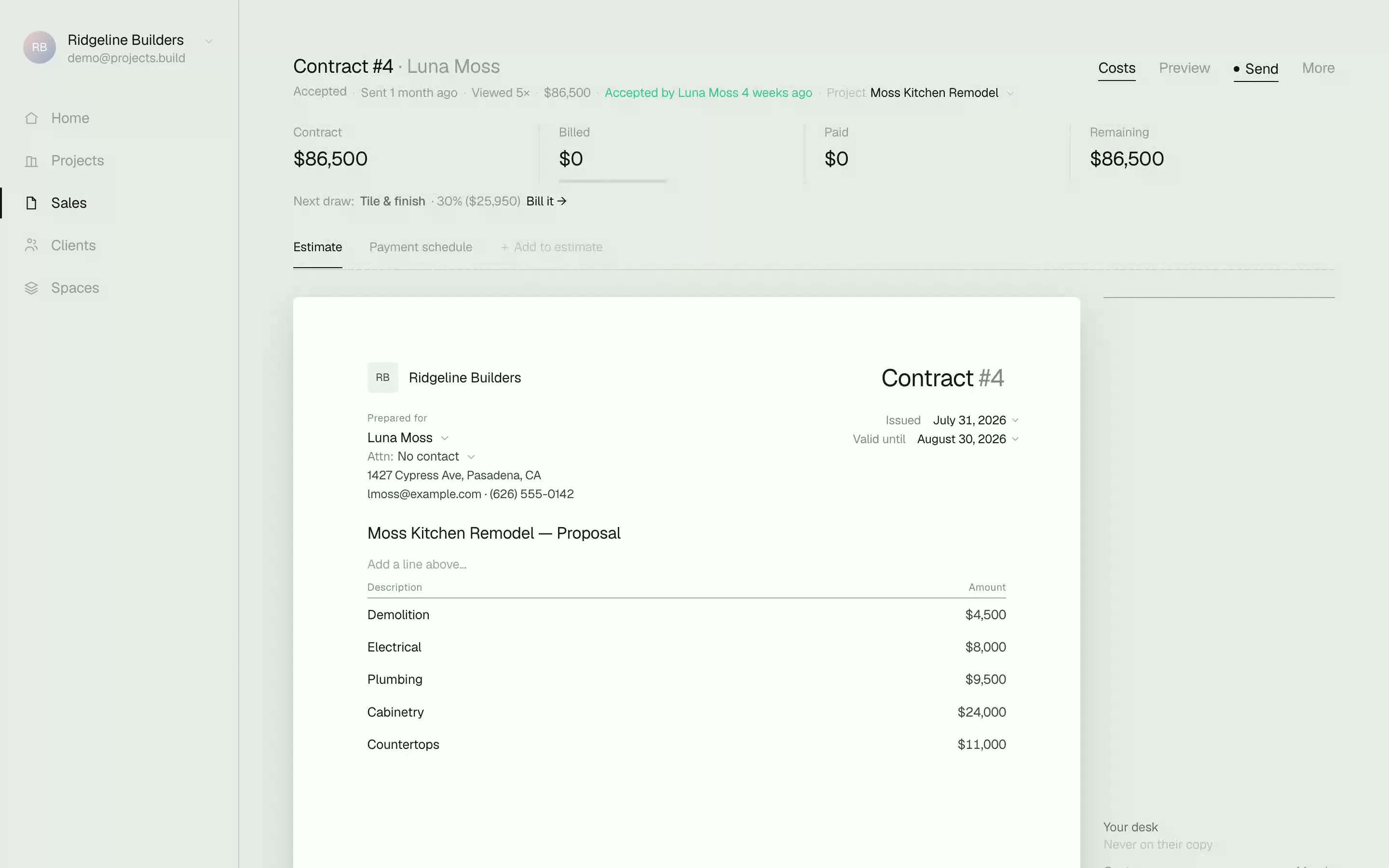
Proposal pages, a cover photo, narrative blocks, your own letterhead — what you edit is exactly what your client receives. Every line still carries a cost, a margin and a profit figure, in a column that never prints and never reaches them.
Line by line
The parts that make the number trustworthy.
None of this is a spreadsheet trick balanced by hand — it's how a real bid gets priced, sent, and turned into the job that follows it.
Arithmetic in the cell
Type 4x85 into a line and it writes $340 — the price gets worked out where you're already looking, not on a phone next to the keyboard.
Paste from a spreadsheet
Drop in a sub's schedule of values and it lands as priced lines, so a quote you already have never gets retyped by hand.
Your price catalog
Save your trades once with a cost, a price and a unit, and a new estimate opens already priced instead of blank.
Snippet library
Save the exclusions and paragraphs you write on every job as blocks you drop in, so a proposal is assembled, not rewritten from scratch each time.
Cost codes on every line
Tag each line to a cost code and the accepted estimate becomes the job's budget on its own — nothing gets copied over by hand.
Payment schedules
Deposit at start, progress payments, final at completion — or a 30/30/30/10 split in one click, agreed before the job starts, not argued over mid-build.
Schedule-of-values billing
Bill this period by percent complete, per line — that's a pay application, and what you invoice matches what's actually done.
Retention held and released
What's held back and what's owed stay tracked on the document itself, so nobody has to remember a number from three invoices ago.
Estimate becomes project becomes budget
Accept it and the same document opens the project with its budget already filled in — one figure, carried through, not re-entered.
Branding studio
Set your logo, brand color, cover photo and document numbering once, and every estimate after looks like it came from the same professional outfit.
Send it and know
Viewed three times. Idle a week. You'll know.
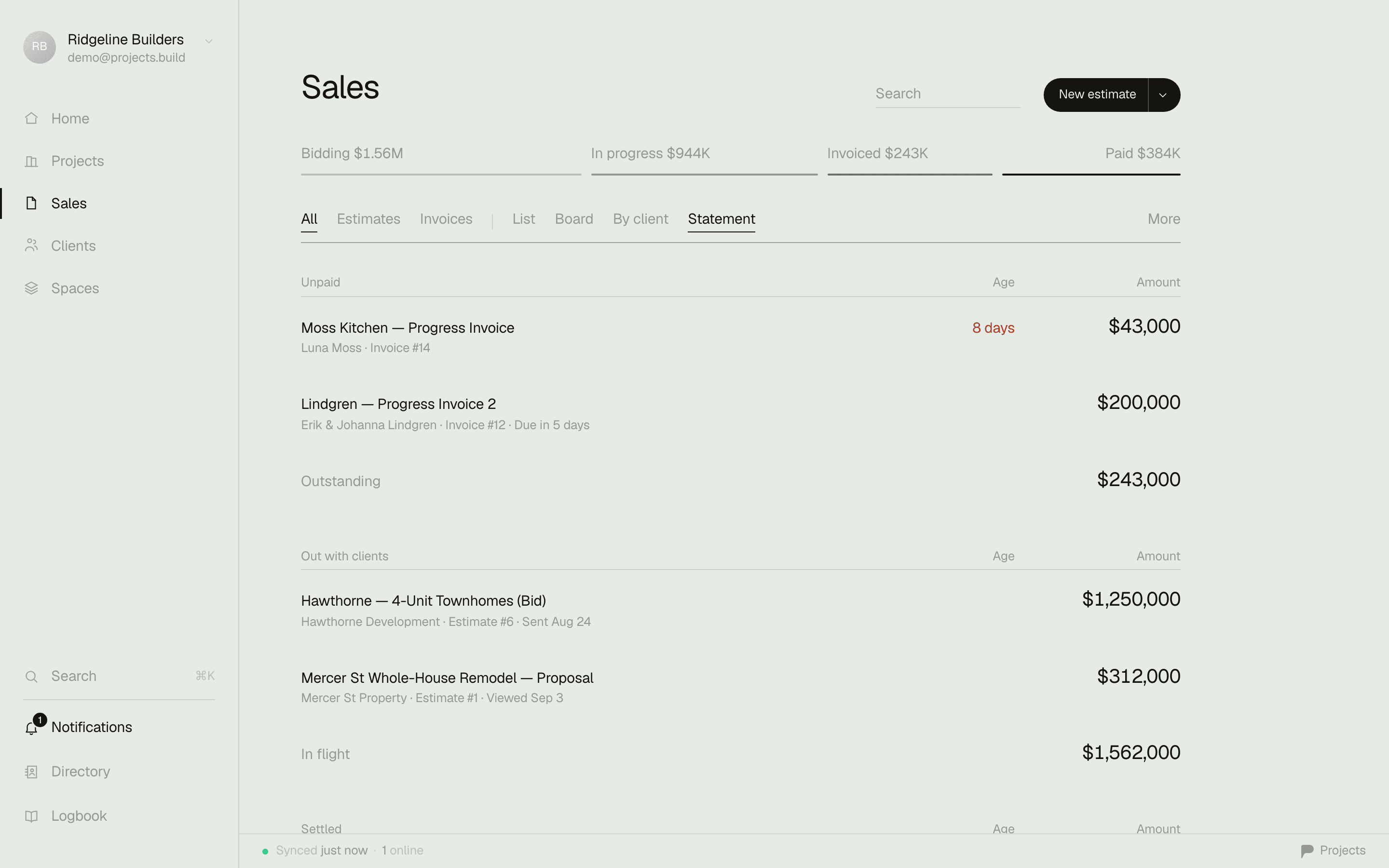
Send an estimate emailed, linked, or as a PDF, and it tells you the moment they open it and how long it's been sitting since — instead of a guess at whether it's time to call. The statement behind every document sorts them into unpaid, out with clients, or settled, each band with its own total and every document's age, so what's owed is a fact, not a memory.